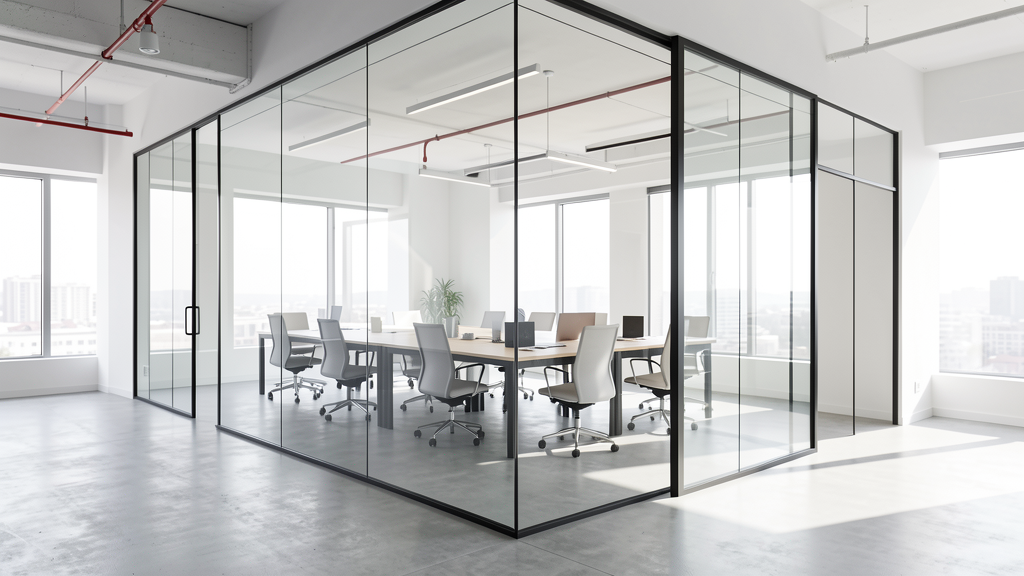
When you're planning an office fit-out or renovation in the Greater Toronto Area, one of the biggest decisions you'll make is how to divide your space. The two most popular options — glass partitions and traditional drywall — each have distinct advantages. In this guide, we'll break down how they compare across the factors that matter most: cost, aesthetics, natural light, flexibility, acoustics, and reconfiguration.
Cost: Upfront vs. Long-Term Value
Drywall is generally the cheaper option on a per-square-foot basis. Standard stud-and-drywall construction uses inexpensive materials and a labour pool that's widely available, which keeps initial costs down. For a business on a tight fit-out budget, drywall can look attractive at the quote stage.
Glass partitions have a higher upfront cost. The glass itself, aluminium or steel framing systems, and specialised hardware all add to the price. However, that higher initial investment often pays off over time. Glass partitions last for decades with minimal maintenance, retain their appearance far longer than painted drywall, and can be reconfigured without demolition — which brings us to the next points.
Aesthetics and First Impressions
There's no contest here: glass partitions create a modern, open, premium look that drywall simply can't match. Frameless or slim-frame glass systems convey transparency and professionalism — qualities that matter when clients visit your office. Drywall, by contrast, creates a closed-off, compartmentalised feel that can make even a spacious floor plan feel cramped.
That said, drywall does offer finishes that glass can't — paint colours, wallpaper, textured surfaces, and built-in branding. For back-of-house areas, meeting rooms requiring privacy, or spaces where a warmer, less corporate feel is desired, drywall still has a role.
Hybrid Approaches
Many of the most successful office designs we've installed use a hybrid approach: glass partitions for perimeter offices and meeting rooms to maximise light, and drywall for utility rooms, server rooms, and areas where opacity is essential.
Natural Light and Occupant Wellbeing
This is where glass partitions shine — literally. Drywall blocks all light, creating interior offices and corridors that depend entirely on artificial illumination. Glass partitions allow daylight to penetrate deep into the floor plate, reducing reliance on overhead lighting and creating a brighter, more welcoming environment.
Natural light is one of the most cited factors in workplace satisfaction. Studies consistently link daylight exposure to improved mood, better focus, and reduced eye strain. When you choose glass, you're not just making an aesthetic choice — you're investing in the daily experience of everyone who uses the space.
Flexibility and Future Reconfiguration
Businesses change. Teams grow, shrink, and reorganise. Drywall partitions are essentially permanent — reconfiguring them means demolition, dust, noise, and waste. The process can disrupt operations for days.
Glass partition systems, particularly modular and demountable types, are designed to be moved. Panels can be relocated, resized, or reconfigured with minimal mess and downtime. This flexibility is a significant long-term cost saving, especially for tenants who may need to restore a space to its original layout at lease end.
Acoustics: Privacy vs. Openness
Drywall wins on sound isolation. A properly insulated drywall wall with acoustic batts can achieve STC (Sound Transmission Class) ratings of 50 or higher, making it ideal for confidential meeting rooms, HR offices, and executive suites.
Glass partitions can still perform well acoustically — double-glazed systems with acoustic laminated glass can reach STC 45+ — but they come at a higher price point. For standard single-glazed partitions, sound privacy is moderate. If acoustics are a priority, discuss double-glazing and acoustic interlayers with your glazing contractor early in the design process.
Sustainability and Waste
Glass is infinitely recyclable, and modular glass partition systems generate far less construction waste than drywall, which typically ends up in landfill after a single use. For businesses pursuing LEED certification or corporate sustainability targets, glass partitions are a strong choice.
Which Should You Choose?
There's no universal answer — it depends on your priorities:
- Choose glass partitions if you value natural light, a modern aesthetic, long-term flexibility, and sustainability.
- Choose drywall if upfront cost is the primary driver and maximum acoustic privacy is needed in specific rooms.
- Choose a hybrid if you want the best of both — premium glass for visible areas and practical drywall where opacity and sound isolation matter most.
At Frank's Glazing Services, we've installed glass partition systems across offices, clinics, and retail spaces throughout the GTA. We help clients weigh these trade-offs every day and design solutions that fit their space, budget, and long-term plans.