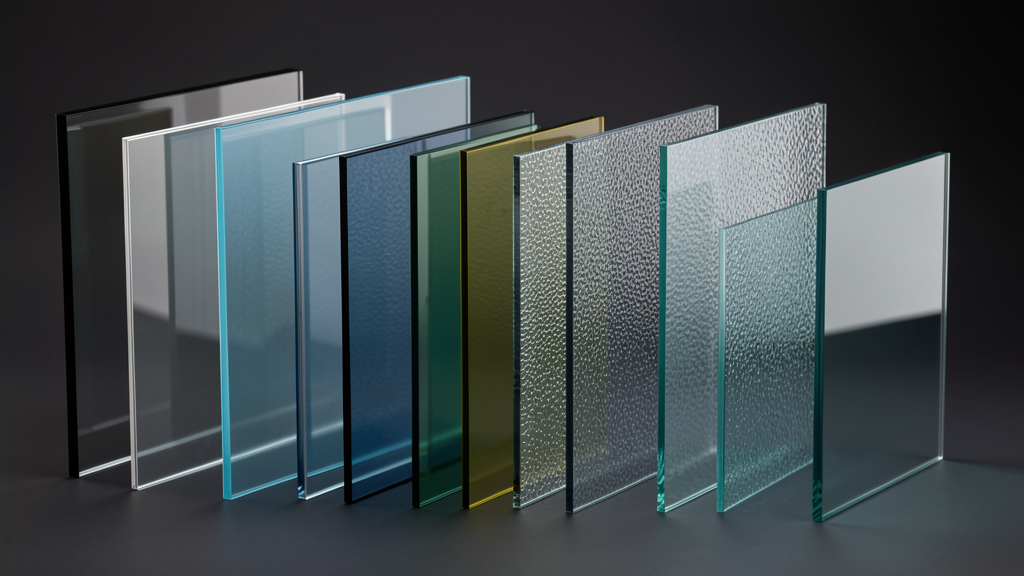
Not all glass is created equal. When you're specifying glazing for a commercial project — whether it's an office tower curtain wall, a retail storefront, or interior glass partitions — the type of glass you choose directly impacts safety, energy performance, acoustics, and aesthetics. In this guide, we'll walk through the six most common types of glass used in commercial glazing and explain where each one excels.
Tempered Glass
Tempered glass, also called toughened glass, is produced by heating standard float glass to approximately 620°C and then rapidly cooling it. This process creates compressive stress on the surface and tensile stress in the centre, making the glass roughly four times stronger than annealed glass of the same thickness.
The key safety property of tempered glass is how it fails: when broken, it shatters into small, granular chunks rather than sharp shards. This makes it the standard choice for glass doors, sidelites, shower enclosures, and partition walls in commercial settings. Building codes across Canada require tempered glass in locations subject to human impact, including doors and glazing near floor level.
Best Uses
Glass doors, entranceways, interior partitions, storefronts, railings, and any location where safety glazing is mandated by code.
Laminated Glass
Laminated glass consists of two or more layers of glass bonded together by an interlayer — most commonly polyvinyl butyral (PVB) or ethylene-vinyl acetate (EVA). If the glass breaks, the interlayer holds the fragments in place, preventing them from falling and reducing the risk of injury.
This fragmentation behaviour makes laminated glass ideal for overhead glazing, skylights, and exterior curtain walls where falling glass would be dangerous. The interlayer also provides acoustic insulation and blocks up to 99% of UV radiation, protecting furnishings and merchandise from fading.
Best Uses
Overhead glazing, skylights, exterior curtain walls, balustrades, security glazing, and acoustic partitions. Laminated glass is also used in hurricane and blast-resistant assemblies.
Low-E Glass
Low-emissivity (Low-E) glass has a microscopic coating applied to one surface that reflects infrared heat while allowing visible light to pass through. In winter, the coating reflects interior heat back inside, reducing heating costs. In summer, it reflects exterior heat away, lowering cooling loads.
Low-E coatings are measured by their Solar Heat Gain Coefficient (SHGC) and Visible Light Transmission (VLT). A high-performance Low-E coating can dramatically reduce a building's HVAC energy consumption, which is why it's become standard in commercial facade glazing across Canada's varied climate zones.
Best Uses
Exterior windows, curtain walls, and any large glazed area where thermal performance matters. Often combined in insulating glass units for maximum efficiency.
Wired Glass
Wired glass has a steel wire mesh embedded within the glass during manufacturing. Historically used as fire-rated glazing, wired glass holds together when cracked due to the wire grid, preventing the passage of smoke and flames for a limited period.
It's important to note that traditional wired glass is weaker than annealed glass and not a safety glazing material. Modern fire-rated alternatives — including ceramic glass and specialised laminated products — often outperform wired glass, but wired glass remains in use in heritage buildings and some institutional settings due to its lower cost.
Best Uses
Fire-rated doors and windows in corridors, stairwells, and institutional buildings where a fire rating is required on a budget.
Patterned Glass
Patterned glass, also called textured or figured glass, is produced by passing molten glass between rollers that imprint a decorative pattern. The resulting surface diffuses light and obscures visibility while still allowing daylight transmission.
In commercial settings, patterned glass is used where privacy is needed without sacrificing light — bathroom partitions, office screens, and decorative feature walls. Common patterns include reeded, fluted, Georgian-wired, and frosted textures. Patterned glass can also be tempered or laminated for safety compliance.
Best Uses
Privacy glazing, decorative interior walls, bathroom and meeting room partitions, and feature design elements in retail and hospitality spaces.
Insulating Glass Units (IGUs)
An insulating glass unit consists of two or more panes of glass separated by a spacer and sealed to create a hermetically sealed air or gas-filled cavity. The trapped gas — typically argon or krypton — provides a thermal barrier that significantly outperforms single glazing.
IGUs are the workhorse of modern commercial facade construction. When combined with Low-E coatings, a double-pane IGU can reduce heat loss by more than 50% compared to single glass. Triple-pane IGUs offer even higher performance for extreme climates. IGUs also reduce condensation and improve acoustic insulation.
Best Uses
All exterior commercial glazing — curtain walls, storefront systems, windows, and structural glazing. Essentially any application where thermal and acoustic performance matters.
Choosing the Right Glass for Your Project
Selecting the right glass type depends on your project's specific requirements:
- Safety — Tempered or laminated glass where impact risk exists.
- Energy efficiency — Low-E coatings within IGUs for exterior glazing.
- Fire rating — Wired or ceramic glass for fire-rated assemblies.
- Privacy and design — Patterned glass for visual screening with light transmission.
- Acoustics — Laminated glass or double-glazed IGUs with acoustic interlayers.
In practice, many commercial projects combine multiple glass types. A curtain wall might use Low-E insulating glass for vision panels and spandrel glass for opaque areas. Interior partitions might use tempered glass for safety with a laminated acoustic panel for meeting rooms.
At Frank's Glazing Services, we help architects, contractors, and property owners across the GTA specify the right glass for every application. Whether you're building new or upgrading existing glazing, we'll guide you through the options and deliver a result that performs for decades.